The cognitive science of intuition explains why a gut feeling can appear before you know how to explain it.
Intuition is often described as mysterious.
It is not.
What feels like a sudden insight is usually the result of your brain processing patterns faster than conscious reasoning can follow.
Intuition is compressed experience operating below the surface of awareness.
Understanding that changes how you use it — especially in leadership, creativity, and decision-making under uncertainty.
→ Read the neuroscience of fast intuitive decisions
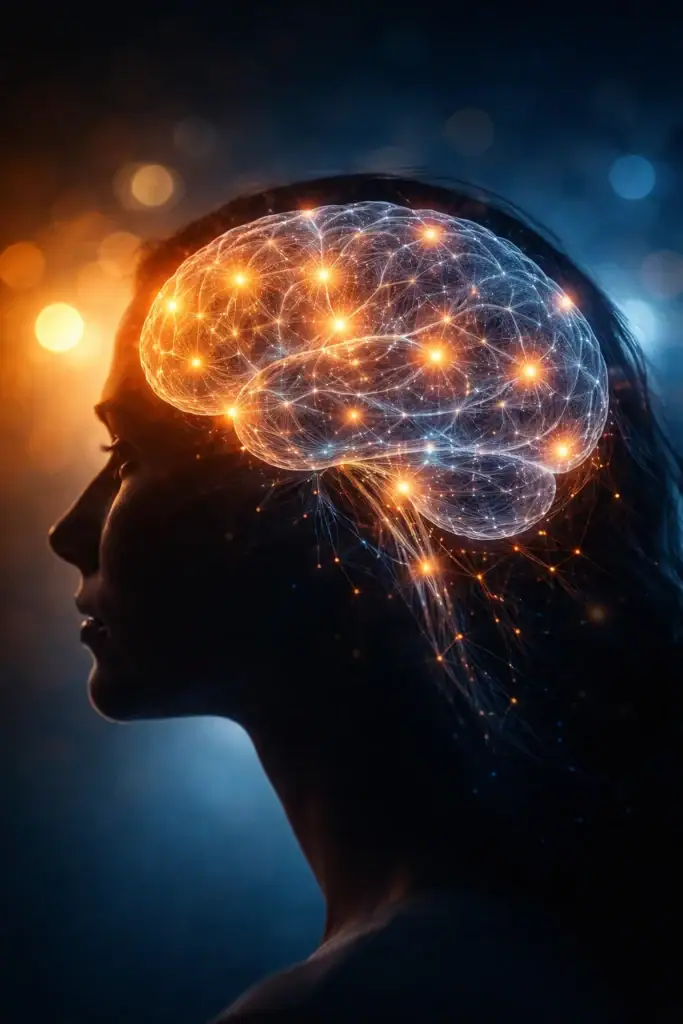
What Intuition Actually Is
Intuition is the brain’s ability to recognize patterns, generate predictions, and guide decisions without deliberate step-by-step analysis.
It can appear as:
- a fast sense that something fits or does not fit
- sudden clarity without visible reasoning
- a subtle body signal before conscious thought catches up
- a feeling that something is right, wrong, risky, or promising
The key point is simple:
Intuition is not separate from thinking. It is thinking before explanation.
→ Learn how to recognize real intuition instead of noise
System 1 and System 2: What Really Happens
Daniel Kahneman popularized the idea of two thinking modes:
- System 1: fast, automatic, pattern-based, and effortless
- System 2: slow, deliberate, analytical, and effortful
Intuition belongs mostly to System 1.
But that does not make it irrational.
It means the processing happens outside full conscious awareness, using patterns built through experience, memory, feedback, and emotional relevance.
The real skill is not choosing intuition or analysis.
The real skill is knowing when each one is reliable.
How the Brain Generates Intuition
Intuition emerges from several systems working together:
- Hippocampus: helps store and compare past experiences
- Prefrontal cortex: filters relevance, goals, and context
- Insula: translates internal body signals into felt awareness
- Amygdala: detects emotional significance and possible risk
- Basal ganglia: support automatic learned pattern recognition
Together, these systems generate a rapid internal prediction based on what you have already experienced.
You experience that prediction as intuition.
Pattern Recognition Is the Core Mechanism
At its core, intuition is pattern recognition.
Your brain constantly compares the current situation with stored experience and predicts what is likely to happen next.
This is why experienced professionals often “just know” when something is off.
They are not guessing randomly.
They are recognizing a familiar pattern before they can fully describe it.
The more relevant experience and feedback you have, the more accurate intuition can become.
Understanding how the brain processes intuition becomes even clearer when viewed through a broader cognitive framework. Rather than processing isolated pieces of information, the mind continuously builds, tests, and updates an internal model of reality that shapes perception, prediction, and judgment. Learn more in How the Mind Builds an Internal Model of Reality.
The Role of Emotion in Intuition
Emotion is not separate from intuition.
It is part of the signaling system.
Feelings like tension, ease, discomfort, curiosity, or certainty may be the surface expression of deeper pattern recognition.
But not every emotional signal is reliable.
- calm, stable signals often reflect useful pattern recognition
- urgent, reactive signals often reflect stress, bias, or fear
- familiarity can feel like truth even when it is only habit
- desire can feel like certainty when it is really attachment
This is why self-awareness matters. It helps you separate signal from emotional noise.
→ Explore how emotional intuition guides decisions
When Intuition Works — And When It Fails
Intuition becomes more reliable when:
- the environment is familiar enough to contain learnable patterns
- you have relevant experience
- you have received accurate feedback over time
- emotional intensity is not distorting perception
- you can test the signal against reality
Intuition becomes less reliable when:
- the situation is new or unpredictable
- biases distort what you notice
- stress creates false urgency
- you mistake confidence for accuracy
- there is no feedback loop to refine the pattern
The problem is not intuition itself.
The problem is uncalibrated intuition.
How to Improve Intuition
You do not “learn” intuition from nothing.
You refine it.
- gain experience in relevant domains
- reflect on decisions and outcomes
- notice body-based signals before acting
- separate calm clarity from urgency
- balance intuition with analytical verification
- track when your intuition was accurate and when it was not
Over time, intuition becomes less dramatic and more precise.
→ Practice intuition exercises to strengthen signal accuracy
A Practical Intuition Check
Before trusting a gut feeling, ask:
- Do I have enough experience in this situation?
- Does the signal feel calm or urgent?
- Is this pattern familiar, or am I guessing?
- What feedback would help me test this?
- What would analysis add before I act?
This does not weaken intuition.
It calibrates it.
Conclusion: Intuition Is Fast Thinking Before Explanation
Intuition is not a mystery.
It is a cognitive process that operates faster than conscious reasoning.
When understood correctly, intuition becomes a powerful decision-making tool — not because it replaces analysis, but because it complements it.
The goal is not to blindly trust every gut feeling.
The goal is to understand when intuition is signal, when it is noise, and how to test the difference.
FAQ: Cognitive Science of Intuition
What is the cognitive science of intuition?
The cognitive science of intuition studies how the brain uses pattern recognition, memory, emotion, prediction, and subconscious processing to create fast gut feelings or intuitive judgments.
Is intuition just guessing?
No. Guessing is random. Intuition is often based on learned patterns, prior experience, emotional relevance, and fast subconscious processing.
When is intuition reliable?
Intuition is most reliable when you have relevant experience, the environment has learnable patterns, and feedback has helped calibrate your judgment over time.
Leave a Reply
You must be logged in to post a comment.