The neuroscience of intuition explains how your brain makes fast decisions before conscious reasoning catches up. What feels like a “gut feeling” is actually rapid pattern recognition shaped by memory, emotion, and bodily signals.
You’ve seen it before: something feels off before you can explain it. A decision becomes clear before the analysis is finished. A hesitation appears without a visible reason.
This is not randomness. It’s your brain working ahead of your awareness.
If you ignore it, you delay decisions. If you misread it, you create noise. But if you understand it — you gain speed without losing accuracy.
To see how this plays out in real decisions, read why ignoring intuition creates hidden costs.
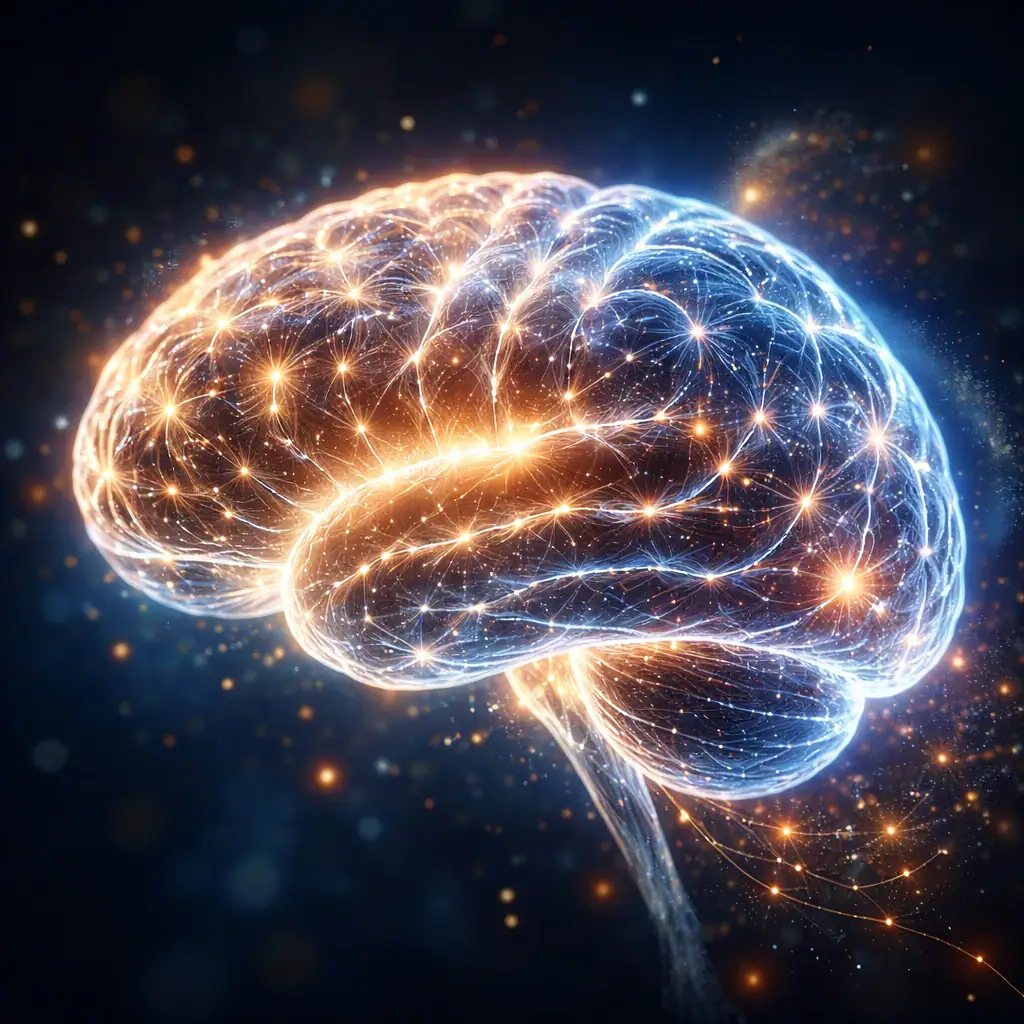
What the Neuroscience of Intuition Actually Shows
Intuition is not magic. It is compressed cognition.
Your brain continuously processes patterns below conscious awareness. When enough signals align, it produces a direction — instantly.
Research in cognitive science shows that intuitive judgment relies on rapid, unconscious processing rather than step-by-step reasoning (see Stanford Encyclopedia of Philosophy).
Neuroscience increasingly suggests that intuitive judgments emerge from complex predictive processes rather than mysterious instincts. A broader explanation is that the brain continuously builds and updates an internal model of reality, allowing past experience to shape future perception and decision-making. Explore this framework in How the Mind Builds an Internal Model of Reality.
How the Brain Makes Intuitive Decisions
Intuition emerges from interaction between multiple systems — not a single “intuition center.”
- Amygdala — detects relevance and threat instantly
- Hippocampus — retrieves stored patterns
- Prefrontal cortex — integrates decision context
- Insula — translates body signals into awareness
This is why intuition often appears in the body first — tension, clarity, resistance, ease.
That signal is not emotional noise. It’s early-stage processing.
System 1 and System 2 — How Decisions Actually Happen
Daniel Kahneman described two systems:
- System 1 — fast, automatic, intuitive
- System 2 — slow, analytical, deliberate
But in practice, decisions are not either/or.
Intuition proposes. Analysis evaluates.
See how this works in practice: intuition in real leadership decisions.
INTERACTIVE: How Your Brain Decides
What happens first when you make a decision?
Your brain detected a pattern before conscious reasoning.
The decision likely formed earlier — thinking explains it afterward.
Your system detects something but lacks enough clarity yet.
Why Intuition Improves With Experience
Intuition is not a talent. It is trained pattern recognition.
The more high-quality exposure you have, the more accurate your intuitive signals become.
This is why experts “just know.” They’ve seen enough patterns to compress them into instant recognition.
To build this deliberately, see how to train intuition step by step.
When Intuition Becomes Wrong
- stress and overload
- fear-driven reactions
- limited experience
- bias
Real intuition is quiet and clear. Distorted intuition is urgent and heavy.
How to Improve Intuition (According to Neuroscience of Intuition)
- increase real-world exposure
- track decisions and outcomes
- reduce cognitive overload
- train somatic awareness
- separate signal from emotion
This is where intuition becomes usable — not abstract.
Conclusion: Intuition Happens Before Thought
Your brain decides before you explain.
The advantage is not choosing intuition over logic — but knowing when each should lead.
When they align, decisions become faster, clearer, and more accurate.