Why do I feel like I have to be available?

Estimated reading time: 22–25 minutes
The Constant Availability Loop™ explains why the modern brain gradually learns that staying psychologically available feels safer than becoming fully present.
Have you ever noticed that you are never completely unavailable anymore?
Your phone is beside you.
Your smartwatch vibrates.
You wonder whether someone has replied.
You briefly check your inbox.
You return to what you were doing.
Five minutes later, you check again.
No emergency happened.
No one demanded your attention.
Yet your attention never completely left the possibility that someone might.
Millions of people describe this experience in different ways.
- Why do I feel like I have to be available all the time?
- Why can’t I disconnect?
- Why do I feel guilty when I don’t reply?
- Why do I keep checking my phone?
- Why do I always feel on call?
- Why can’t I stop thinking about messages?
These questions appear different.
They may actually describe the same underlying cognitive process.
Perhaps you are not addicted to your phone.
Perhaps your brain has gradually learned that remaining psychologically available feels safer than becoming fully present.
Why Do I Feel Like I Have to Be Available All the Time?
Many people feel permanently available because the brain gradually learns to associate availability with reducing uncertainty. Every notification, message, or possibility of being needed encourages attention to remain partially reserved for future demands. Over time, availability stops being a deliberate choice and becomes the default state of attention.
Within Intuition Management, I call this process the Constant Availability Loop™.
The framework builds on established research in predictive processing, cognitive neuroscience, attention, reinforcement learning, and decision-making to explain why modern communication technologies can reshape how attention allocates its limited resources.
This is not simply about smartphones.
Nor is it simply about notifications.
It is about how the brain learns to remain psychologically prepared for events that have not yet happened.
Eventually, attention is no longer focused only on the present moment.
Part of it becomes permanently reserved for possible future interruptions.
The problem is rarely that someone constantly needs you.
The problem is that your attention gradually learns to expect that someone might.
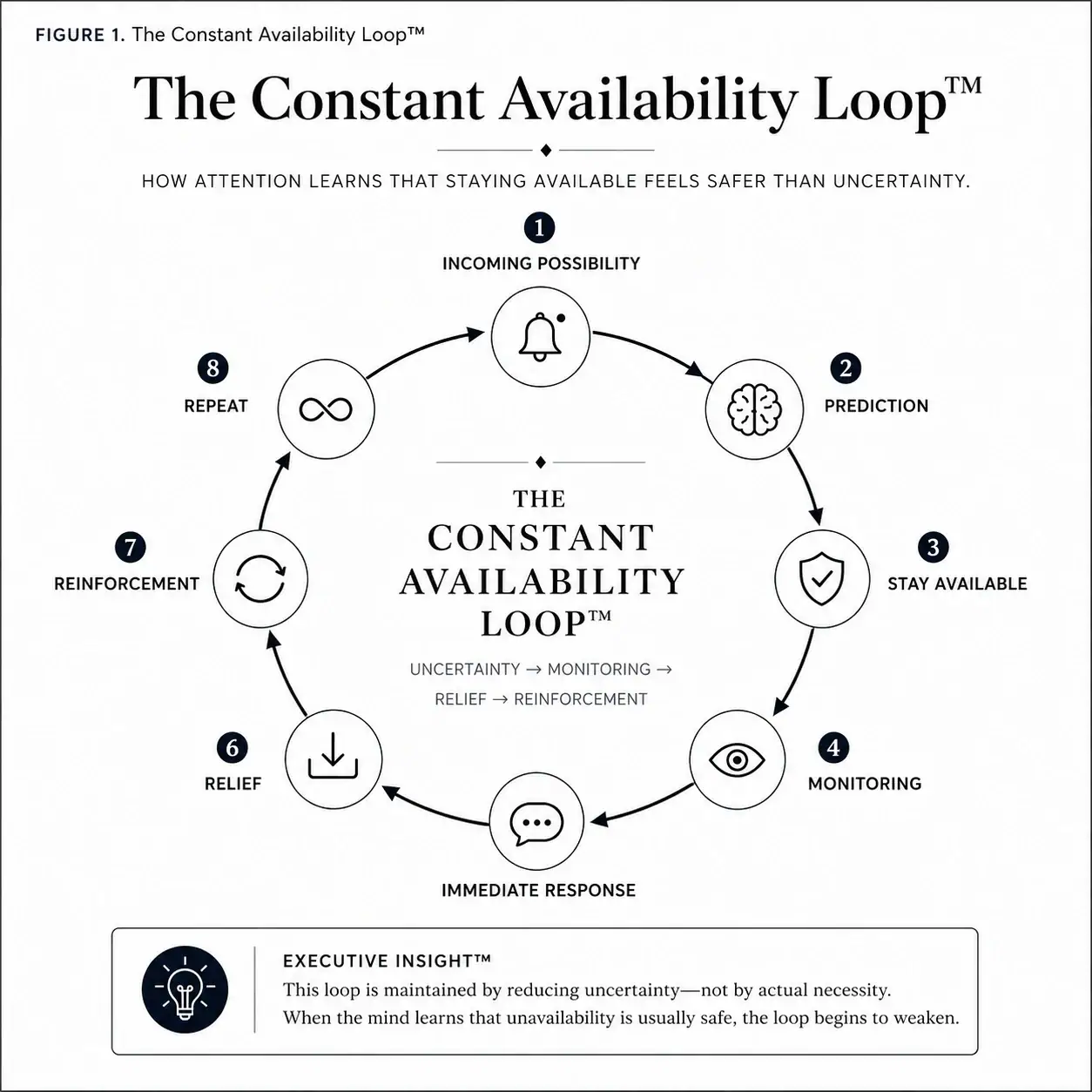
Figure 1. The Constant Availability Loop™
Figure 1 summarizes the entire framework.
Rather than seeing constant availability as a personality trait, it explains it as a self-reinforcing learning cycle.
An incoming possibility creates uncertainty.
Uncertainty generates prediction.
Prediction encourages psychological availability.
Availability increases monitoring.
Monitoring produces faster responses.
Fast responses reduce uncertainty.
The resulting relief rewards the entire sequence.
The brain therefore becomes even more likely to remain available the next time uncertainty appears.
Eventually, the loop operates automatically.
You no longer consciously decide to stay available.
Your attentional system simply assumes that remaining available is the safest strategy.
Constant availability is rarely maintained by obligation alone.
It is maintained by a brain that has learned availability reduces uncertainty.
Stage 1: Incoming Possibility
Every cognitive loop begins with an event.
The Constant Availability Loop™ begins with something much smaller.
It begins with a possibility.
Your phone lights up.
You hear a vibration.
You remember that someone might reply.
You suddenly wonder whether your manager emailed you.
You think about checking Slack.
None of these situations necessarily require action.
Many of them are not even real events.
They are simply possibilities.
That distinction matters because the human brain evolved to respond not only to what is happening but also to what might happen next.
This ability is one of the greatest strengths of human cognition.
It allows us to prepare before problems occur.
It helps us anticipate danger.
It supports planning.
It improves survival.
But it also creates an important vulnerability.
The brain often reacts to possible future events before those events actually exist.
Modern communication technologies expose this vulnerability continuously.
Every unread message represents unfinished information.
Every notification represents an unresolved possibility.
Every missed call creates an unanswered question.
Your brain naturally attempts to reduce that uncertainty.
Long before you consciously decide whether to respond, attention has already begun preparing for the possibility that the information could matter.
This process closely resembles what cognitive scientists describe through predictive processing.
Rather than passively waiting for information, the brain continuously generates predictions about what is most likely to happen next.
Incoming information is then compared against those predictions.
The goal is not perfect accuracy.
The goal is reducing uncertainty quickly enough to support effective action.
Your brain spends much of its time predicting reality before reality fully arrives.
Within the Adaptive Reality Model™, these predictions continuously update your internal model of reality.
Most predictions disappear immediately because they prove unimportant.
Modern communication changes that balance.
Instead of a few meaningful possibilities each day, the brain now encounters hundreds.
Someone might write.
Your manager might call.
A client might need something.
A family member might message.
Social media might contain something important.
News might have changed.
The brain cannot know in advance which possibility matters.
So it prepares for many of them.
Over time, that preparation quietly becomes the default state of attention.
The first stage of the Constant Availability Loop™ is not communication.
It is possibility.
This also explains why many people check their phones before any notification arrives.
The behavior is not always triggered by external information.
Sometimes it is triggered by the prediction that information could arrive.
The possibility itself becomes sufficient to recruit attention.
Once that happens, the loop naturally progresses to its second stage.
The brain begins transforming possibility into expectation.
Stage 2: Prediction
If incoming possibility opens the loop, prediction keeps it alive.
The brain rarely waits passively to discover what happens next.
Instead, it continuously simulates likely futures.
Will someone reply?
Will my boss expect an answer?
Will I miss something important?
Could ignoring this message create a problem later?
These predictions usually happen automatically.
You rarely notice them directly.
You notice only the feeling they produce.
A subtle pull toward your phone.
A slight difficulty concentrating.
A sense that you should “just check quickly.”
The prediction usually arrives before the conscious justification.
This is why the Constant Availability Loop™ often feels irrational.
Consciously, you know nothing urgent has happened.
Yet your attentional system behaves as though preparing now is safer than waiting.
Each successful prediction reinforces the next one.
If checking your phone reveals a message, the brain quietly concludes that checking was worthwhile.
It does not remember the dozens of unnecessary checks.
It remembers the few that appeared to justify the behavior.
Prediction teaches the brain that staying ready feels safer than risking surprise.
From here, the loop enters its third stage.
Prediction gradually becomes a permanent state of psychological availability, where attention remains partially reserved for events that have not yet occurred.
Stage 3: Psychological Availability
Prediction changes attention in a subtle but important way.
Instead of simply expecting that something might happen, the brain begins preparing for it before any evidence appears.
This preparation is what I call psychological availability.
It is different from physical availability.
You may be eating dinner.
Playing with your children.
Reading a book.
Watching a movie.
Walking through a park.
From the outside, you appear fully present.
Inside your mind, however, a small portion of attention remains reserved for something that has not happened yet.
You remain mentally available.
The Constant Availability Loop™ is not maintained because you are constantly communicating.
It is maintained because part of your attention is constantly waiting to communicate.
This distinction explains why so many people describe an unusual form of mental fatigue.
Nothing dramatic happened.
They were not solving difficult problems.
They were not making major decisions.
Yet by the end of the day they feel strangely exhausted.
Part of that exhaustion comes from continuously reserving cognitive resources for future possibilities.
Attention is never completely released.
The nervous system never fully concludes:
“Nothing requires monitoring right now.”
Instead it quietly maintains a background expectation that something important could happen at any moment.
This continuous readiness resembles a mild form of cognitive hypervigilance.
Not because the environment is objectively dangerous.
Because the brain has learned that remaining mentally prepared reduces uncertainty.
Within the Adaptive Reality Model™, this has an important consequence.
Your internal model gradually begins representing the world as a place where interruptions are always possible.
As that model becomes more deeply learned, psychological availability gradually feels normal.
Many people no longer recognize it as a learned state.
They assume this constant readiness is simply part of adulthood.
Part of having responsibilities.
Part of being reliable.
Part of being successful.
Psychological availability often feels like responsibility.
Sometimes it is simply an attentional habit that has never been questioned.
This is also why many people find genuine rest surprisingly difficult.
The body may stop working.
The mind does not.
Even during quiet moments, attention remains partially allocated to events that may never occur.
The result is a subtle but persistent feeling that you are never completely off duty.
As psychological availability becomes the default state, it naturally leads to the next stage of the loop.
If part of your attention is always waiting, it eventually begins actively looking.
Stage 4: Continuous Monitoring
Psychological availability quietly changes the purpose of attention.
Instead of focusing primarily on the present task, attention begins dividing itself between what is happening now and what might require action next.
The result is continuous monitoring.
You glance at your phone.
You refresh your inbox.
You check Slack.
You reopen the messaging app.
You briefly scan notifications.
Most of these actions take only a few seconds.
Individually they seem insignificant.
Together they reshape the way attention is allocated throughout the day.
The purpose of monitoring is not finding information.
It is reducing uncertainty.
This explains one of the strangest features of modern communication.
People often check their phones even when they know nothing new is likely to appear.
The behavior is not driven by information.
It is driven by the possibility that uncertainty could be eliminated.
Sometimes there is a message.
Most of the time there is not.
Yet the monitoring continues because occasional success is enough to reinforce the habit.
Behavioral psychology has long shown that unpredictable rewards create some of the strongest learning patterns.
Modern communication platforms unintentionally exploit exactly this principle.
You never know when the next important message will arrive.
Therefore the safest strategy appears to be checking frequently.
Over time, monitoring becomes less like a conscious decision and more like an automatic attentional reflex.
This persistent scanning also contributes to cognitive overload.
Every monitoring cycle consumes a small amount of mental energy.
Each interruption forces attention to disengage, reorient, and then attempt to return to the previous task.
Repeated dozens or hundreds of times each day, these tiny shifts accumulate into substantial cognitive fatigue.
The greatest cost of constant monitoring is not the few seconds spent checking.
It is the attention that never fully returns.
Eventually the loop reaches a point where monitoring is rewarded.
A message arrives.
You respond immediately.
Uncertainty disappears.
That moment of relief becomes one of the most powerful learning signals in the entire framework.
It is here that the Constant Availability Loop™ becomes self-reinforcing.
Stage 5: Immediate Engagement
Eventually, monitoring succeeds.
A notification appears.
An email arrives.
A message pops onto the screen.
A missed call appears.
At that moment, the brain faces a decision.
Should attention remain with the present task?
Or should it immediately shift toward the new possibility?
When the Constant Availability Loop™ has been reinforced for long enough, the answer often feels automatic.
You respond.
Not necessarily because the message is important.
Because responding immediately feels psychologically safer than waiting.
The brain is no longer asking whether the message deserves attention.
It is asking whether uncertainty deserves to continue.
This distinction explains why people often interrupt meaningful work to answer messages that could easily wait another hour.
Objectively, nothing important changed.
Subjectively, the unfinished possibility disappeared.
That immediate reduction in uncertainty is rewarding.
Within the Immediate Response Loop™, this moment represents the transition from anticipation to action.
The Constant Availability Loop™ explains why attention remained prepared.
The Immediate Response Loop™ explains why action happens so quickly once the opportunity appears.
Together they describe two connected layers of the same adaptive system.
One maintains readiness.
The other rewards rapid engagement.
Preparation makes immediate engagement feel natural.
Immediate engagement teaches the brain that preparation was worthwhile.
Notice that nothing about this process requires addiction.
Nor does it require poor self-control.
It emerges naturally from an adaptive nervous system attempting to reduce uncertainty as efficiently as possible.
This perspective also explains why many highly disciplined people struggle with constant checking.
The issue is not discipline.
The issue is what the attentional system has learned predicts safety.
Unfortunately, immediate engagement carries an invisible cost.
Every interruption fragments attention.
Every rapid reply breaks cognitive continuity.
Every context switch requires the brain to reconstruct what it was previously doing.
Most people notice only the few seconds spent replying.
They rarely notice the minutes required for attention to become deeply engaged again.
The greatest cost of immediate engagement is not the reply.
It is the attention that must repeatedly rebuild itself afterward.
Yet despite this hidden cost, the loop continues.
Because something immediately follows the response.
Relief.
Stage 6: Relief
The moment you reply, something subtle changes.
The uncertainty disappears.
The conversation feels complete.
The notification is gone.
The open prediction closes.
The nervous system experiences relief.
That relief is the most powerful teacher in the entire Constant Availability Loop™.
Behavioral neuroscience has repeatedly shown that the brain learns efficiently from actions that reduce uncertainty.
The reward is not always pleasure.
Sometimes the reward is simply the disappearance of tension.
Relief is one of the brain’s strongest forms of reinforcement.
Notice what happens after replying to an important message.
Your shoulders relax.
Your attention settles.
The unfinished conversation no longer competes for mental resources.
The brain quietly records that sequence.
Notification.
Immediate engagement.
Relief.
From the perspective of learning, the conclusion appears obvious.
Responding quickly reduced uncertainty.
Do it again next time.
This learning happens regardless of whether the original message was actually important.
The nervous system reinforces the reduction of uncertainty itself.
As a result, even trivial conversations can gradually become associated with immediate action.
One reply is insignificant.
Thousands of repetitions quietly reshape attention.
Eventually the expectation of relief becomes so familiar that the brain begins anticipating it before the response even occurs.
This anticipation increases the urge to engage immediately.
The loop therefore becomes increasingly automatic.
From the outside it appears that someone simply likes checking messages.
Internally, a much more sophisticated learning process is unfolding.
The brain is continuously updating its predictions about how uncertainty should be managed.
Within the Adaptive Reality Model™, each experience of relief slightly recalibrates the internal model.
Future situations become increasingly likely to produce the same sequence.
Incoming possibility.
Prediction.
Psychological availability.
Monitoring.
Immediate engagement.
Relief.
Only one step remains.
The brain converts this temporary success into a permanent expectation.
That is how reinforcement transforms an occasional behavior into a default attentional strategy.
Stage 7: Reinforcement
Every completed loop slightly changes the brain.
Not dramatically.
Not overnight.
But repetition slowly teaches attention what to expect from reality.
Each time immediate engagement produces relief, the nervous system quietly updates one prediction.
Staying constantly available appears to reduce uncertainty.
The next time uncertainty appears, the brain is already slightly more prepared to repeat the same sequence.
Incoming possibility.
Prediction.
Psychological availability.
Continuous monitoring.
Immediate engagement.
Relief.
Reinforcement.
The cycle begins again.
With enough repetition, the loop no longer requires conscious decisions.
The attentional system begins running automatically.
You pick up your phone without realizing why.
You open your inbox before deciding whether you actually need to.
You refresh Slack even though you checked it thirty seconds earlier.
You unlock your phone and momentarily forget what you intended to do.
These behaviors are not random.
They are the visible surface of an attentional system that has gradually learned that constant readiness is the safest strategy.
The strongest habits are not built from repetition alone.
They are built from repetition that reliably reduces uncertainty.
This explains why simply deciding to “check less often” rarely produces lasting change.
The behavior is only the final expression of a much deeper learning process.
Unless the brain learns that delayed responses are also safe, the attentional system continues predicting that immediate engagement is the better strategy.
In other words, changing behavior without changing prediction rarely lasts.
Within the Adaptive Reality Model™, reinforcement gradually recalibrates the internal model itself.
The model increasingly assumes:
- I should always be reachable.
- Messages deserve immediate attention.
- Delayed responses create unnecessary risk.
- Checking frequently is responsible.
- Constant availability is normal.
Notice that none of these beliefs need to be consciously held.
They exist primarily as learned expectations inside the attentional system.
That is precisely why the loop can feel so difficult to escape.
You are not fighting a bad habit.
You are attempting to update an internal prediction about how reality works.
The Constant Availability Loop™ does not simply teach the brain to answer messages.
It teaches the brain to expect that being continuously available is part of staying safe.
Fortunately, the same learning process that created the loop can also reverse it.
Just as immediate engagement gradually became associated with safety, delayed engagement can gradually become associated with safety as well.
That shift begins with surprisingly small experiences.
You leave a message unanswered for thirty minutes.
Nothing bad happens.
You answer an email later that afternoon.
The conversation continues normally.
You finish deep work before checking your notifications.
The world keeps functioning.
Each experience provides new evidence.
The internal model begins updating again.
Recovery begins when repeated experience teaches the brain that constant availability is optional—not necessary.
Breaking the Constant Availability Loop™
If the Constant Availability Loop™ develops through learning, recovery must also happen through learning.
This is why willpower alone rarely works.
Willpower attempts to override prediction.
Learning changes prediction itself.
The objective is therefore not to force yourself to ignore messages.
The objective is to repeatedly demonstrate to your nervous system that delayed engagement is often completely safe.
Several practical strategies help support this recalibration.
- Create intentional periods when notifications remain unchecked.
- Finish one meaningful task before opening communication apps.
- Notice the prediction that “I should check” before acting on it.
- Ask whether the urge comes from genuine importance or unresolved uncertainty.
- Allow small experiences of delayed response to become evidence that nothing catastrophic occurs.
- Protect periods of uninterrupted attention each day.
None of these techniques work because they increase discipline.
They work because they provide the brain with new prediction errors.
The expected catastrophe never happens.
The internal model gradually updates.
Attention slowly releases its constant state of readiness.
The goal is not to become unavailable.
The goal is to become available by choice rather than by reflex.
As this recalibration continues, something remarkable begins to happen.
The phone becomes quieter.
Not because notifications disappear.
Because they no longer dominate the attentional system.
The mind gradually rediscovers something it had quietly forgotten.
Constant availability is not a requirement for being responsible.
It is often simply a learned prediction that can be updated.
Key Takeaways
- The Constant Availability Loop™ explains why many people gradually begin feeling that they should always be reachable, even when no objective urgency exists.
- The loop begins with possibility. Simply believing that someone might contact you can recruit attention before any message actually arrives.
- The brain continuously generates predictions about future communication. These predictions prepare attention long before conscious decisions occur.
- Repeated prediction creates psychological availability, a state in which part of your attention remains permanently reserved for possible interruptions.
- Psychological availability naturally leads to continuous monitoring, where checking phones, email, or messaging apps becomes an automatic strategy for reducing uncertainty.
- When monitoring discovers new information, immediate engagement rapidly reduces uncertainty, making quick responses feel psychologically rewarding.
- The resulting relief reinforces the entire attentional sequence, teaching the brain that remaining constantly available is the safest strategy.
- Repeated reinforcement gradually changes the brain’s expectations, causing constant availability to feel normal rather than learned.
- The loop often contributes to cognitive overload, fragmented attention, difficulty concentrating, and persistent mental fatigue.
- It also complements the Immediate Response Loop™, explaining why rapid replies frequently feel automatic rather than intentional.
- From the perspective of the Adaptive Reality Model™, every repetition slightly recalibrates your internal model of reality, increasing the expectation that constant responsiveness is necessary.
- Recovery is not primarily about stronger willpower. It is about repeatedly teaching the brain that delayed responses are often completely safe.
- Each experience of delaying a response without negative consequences provides new evidence that gradually weakens the Constant Availability Loop™.
- The goal is not to become unavailable.
- The goal is to become available intentionally rather than automatically.
Frequently Asked Questions
Why do I always feel like I need to be available?
Many people gradually learn to associate constant availability with safety, responsibility, or competence. After repeated exposure to notifications, emails, and instant messaging, the brain may begin expecting that remaining continuously reachable reduces uncertainty, even when immediate responses are unnecessary.
Why do I check my phone even when there are no notifications?
The brain often reacts to the possibility that new information could appear rather than waiting for it to arrive. Within the Constant Availability Loop™, prediction itself becomes sufficient to trigger monitoring behavior.
What is psychological availability?
Psychological availability describes a state in which part of your attention remains continuously reserved for possible future communication. Even while performing unrelated activities, the mind remains partially prepared for interruptions.
Why do notifications interrupt my concentration so easily?
Notifications introduce uncertainty, which naturally recruits attention. Even brief interruptions require the brain to shift cognitive resources away from the current task before rebuilding focus afterward.
How is the Constant Availability Loop™ different from the Immediate Response Loop™?
The Constant Availability Loop™ explains why attention remains continuously prepared for communication. The Immediate Response Loop™ explains why people often respond immediately once communication actually occurs. Together they describe complementary stages of the same adaptive attentional system.
Can constant availability contribute to cognitive overload?
Yes. Maintaining continuous readiness consumes attentional resources even when no meaningful communication occurs. Over time, repeated monitoring and interruptions may contribute to cognitive overload, mental fatigue, and reduced attentional capacity.
Why does replying quickly feel relieving?
Immediate responses often reduce uncertainty. The nervous system interprets that reduction as relief, reinforcing the behavior and increasing the likelihood that similar situations will trigger rapid engagement in the future.
How can I break the Constant Availability Loop™?
Recovery involves gradually teaching the brain that delayed responses are usually safe. Intentionally allowing small delays, protecting uninterrupted attention, and distinguishing genuine urgency from anticipated uncertainty help recalibrate the attentional system over time.
Related Frameworks
The Constant Availability Loop™ forms part of the wider Intuition Management framework describing how attention, prediction, and decision-making interact.
- Immediate Response Loop™ explains why people often feel compelled to answer messages immediately once communication occurs.
- False Urgency Loop™ explores how cognitive overload gradually causes ordinary situations to feel increasingly urgent.
- Signal vs Noise™ examines how attention distinguishes meaningful information from distractions that merely consume cognitive resources.
- Adaptive Reality Model™ describes how the brain continuously updates its internal model through prediction, perception, action, and feedback.
- Cognitive Calibration™ explores how repeated experiences gradually improve—or distort—the accuracy of that internal model.
- Decision Confidence Loop™ explains how reliable confidence develops through repeated cycles of prediction, action, feedback, and learning.
About the Constant Availability Loop™
The Constant Availability Loop™ is a conceptual framework developed within Intuition Management.
It is not presented as a clinical diagnosis or a formal scientific theory.
Instead, it integrates established findings from cognitive neuroscience, predictive processing, attention research, reinforcement learning, habit formation, cognitive load, and decision science into a practical model describing why modern communication environments can gradually train people to remain psychologically available almost all the time.
The framework is intended to organize existing evidence into a coherent explanation that helps people recognize patterns, understand their own experiences more clearly, and make more intentional decisions about how they allocate attention.
A useful framework does not replace science.
It helps people see scientific evidence as part of a coherent picture.
Final Thought
The modern world rarely asks whether you are truly needed.
It asks whether you are available.
Every notification suggests you should look.
Every message suggests you should reply.
Every vibration suggests something might require your attention.
Over time, the brain can begin believing that constant readiness is simply part of reality.
It is not.
It is often the product of thousands of small learning experiences that quietly taught attention to expect interruption.
The encouraging news is that the same adaptive brain can also learn something new.
It can learn that thoughtful responses are often just as effective as immediate ones.
It can learn that uncertainty is not always danger.
It can learn that genuine presence is often more valuable than constant availability.
The healthiest attentional system is not the one that is always available.
It is the one that knows when availability truly matters.