Decision Clarity
Decision clarity is the moment when the next step becomes obvious without forcing more thinking. It does not come from adding more information. It comes from recognizing what matters and filtering out what does not.
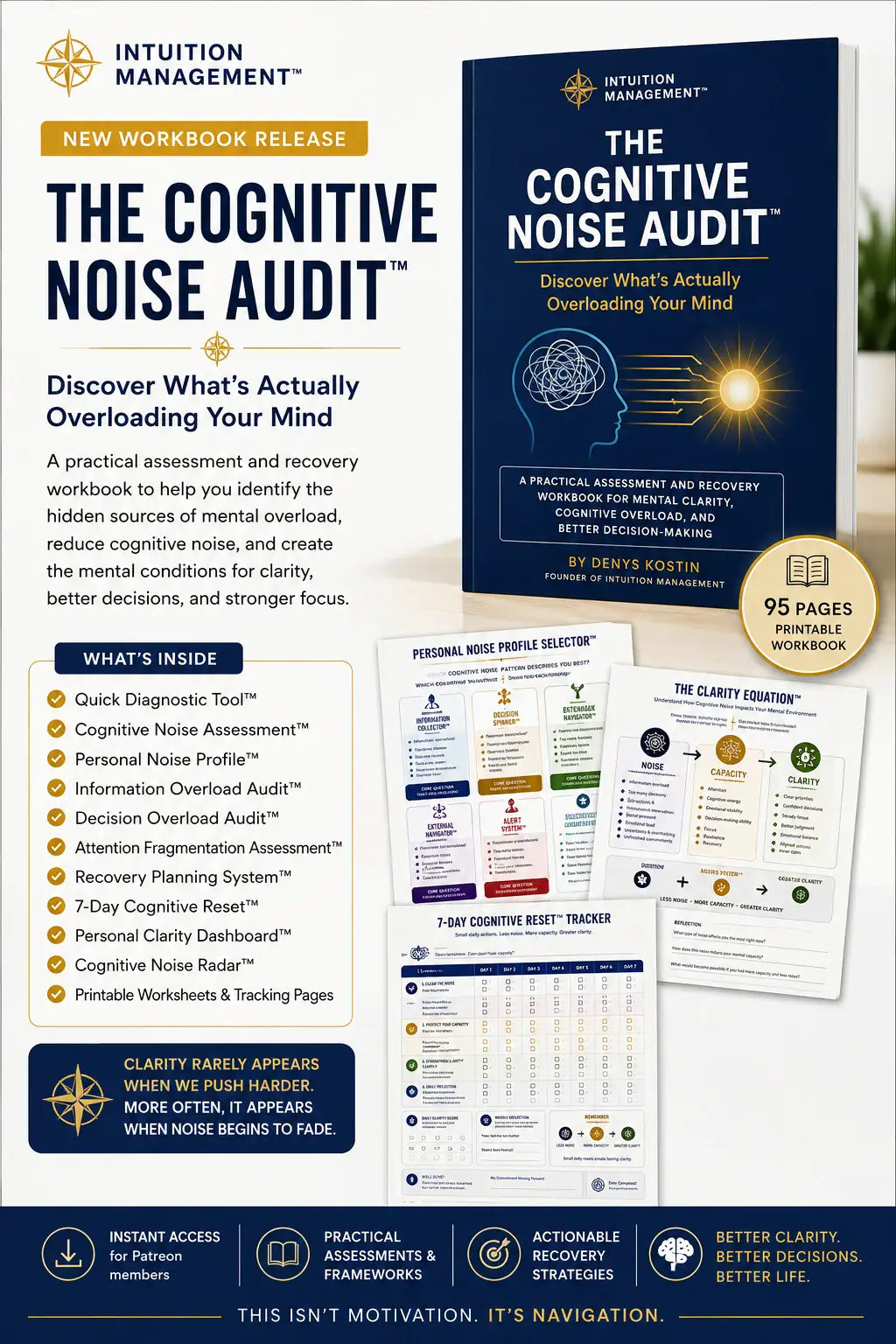
Most people try to reach clarity by analyzing more. But in practice, clarity appears when signal becomes stronger than noise, and when internal conflict is reduced.
How clarity actually appears
Clarity is not created directly. It emerges when different parts of your system align — perception, emotional signals, and pattern recognition.
- Signal vs noise — separating what matters from distraction
- Pattern recognition — seeing meaning before explanation
- Somatic signals — how your body reflects alignment or tension
Why clarity is lost
- Intuition vs anxiety — confusion between signal and fear
- Decision fatigue — reduced ability after repeated choices
- Cognitive bias — distorted interpretation of information
Clarity under pressure
Clarity becomes more difficult when stakes are high. Stress narrows attention and amplifies noise. However, understanding how your system reacts under pressure makes it possible to maintain clarity even in difficult situations.
- Clarity under pressure — decisions when it matters most
- Nervous system — how state affects perception
Below are articles that help you understand how clarity emerges, why it disappears, and how to make decisions with more confidence under uncertainty.