Signal vs Noise
Signal vs noise is the ability to distinguish what actually matters from everything that distracts, confuses, or misleads. It is a core part of decision-making under uncertainty.
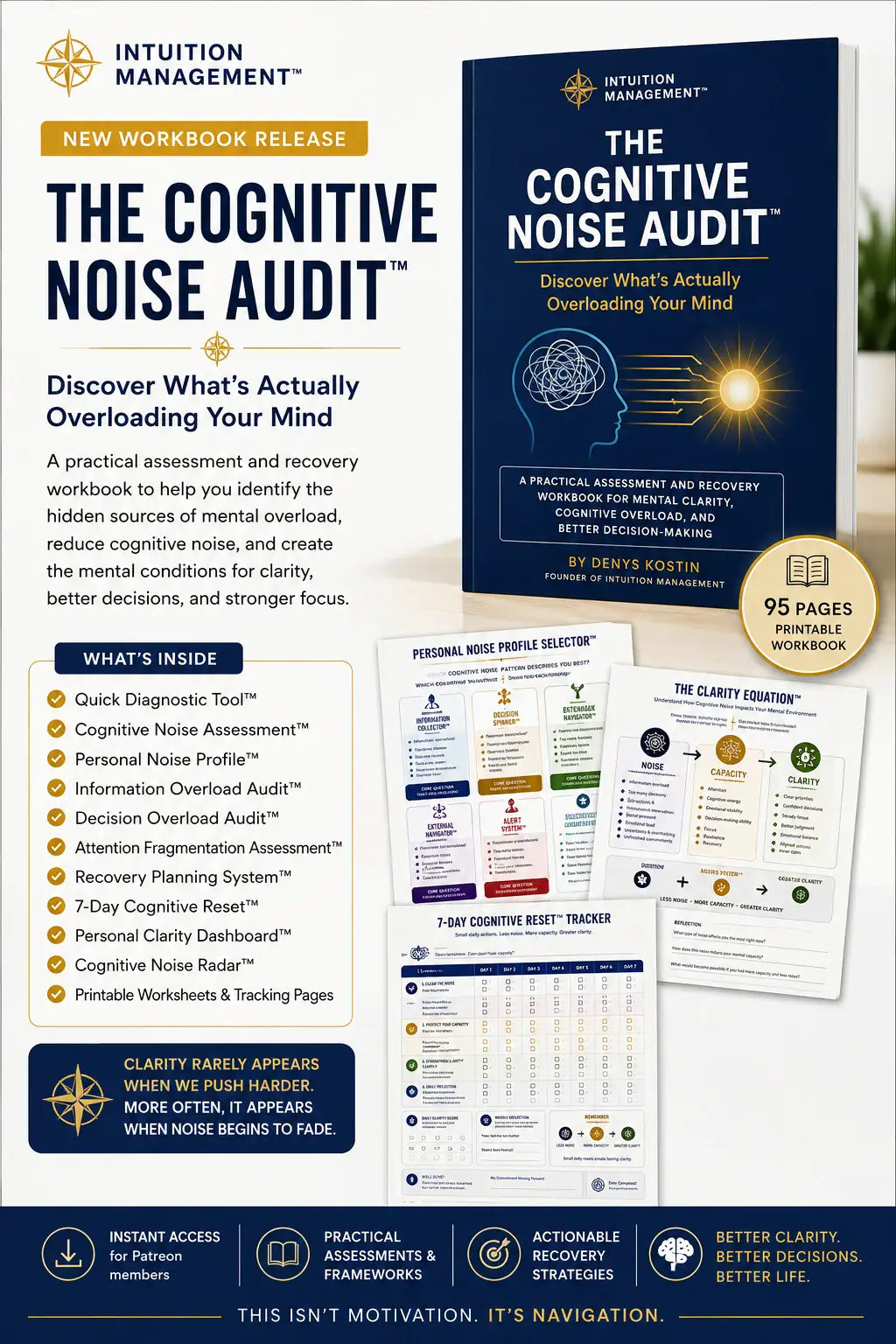
In any situation, you receive more information than you can process. Some of it is relevant (signal), and much of it is irrelevant or misleading (noise). The quality of your decisions depends on how well you separate the two.
What is signal
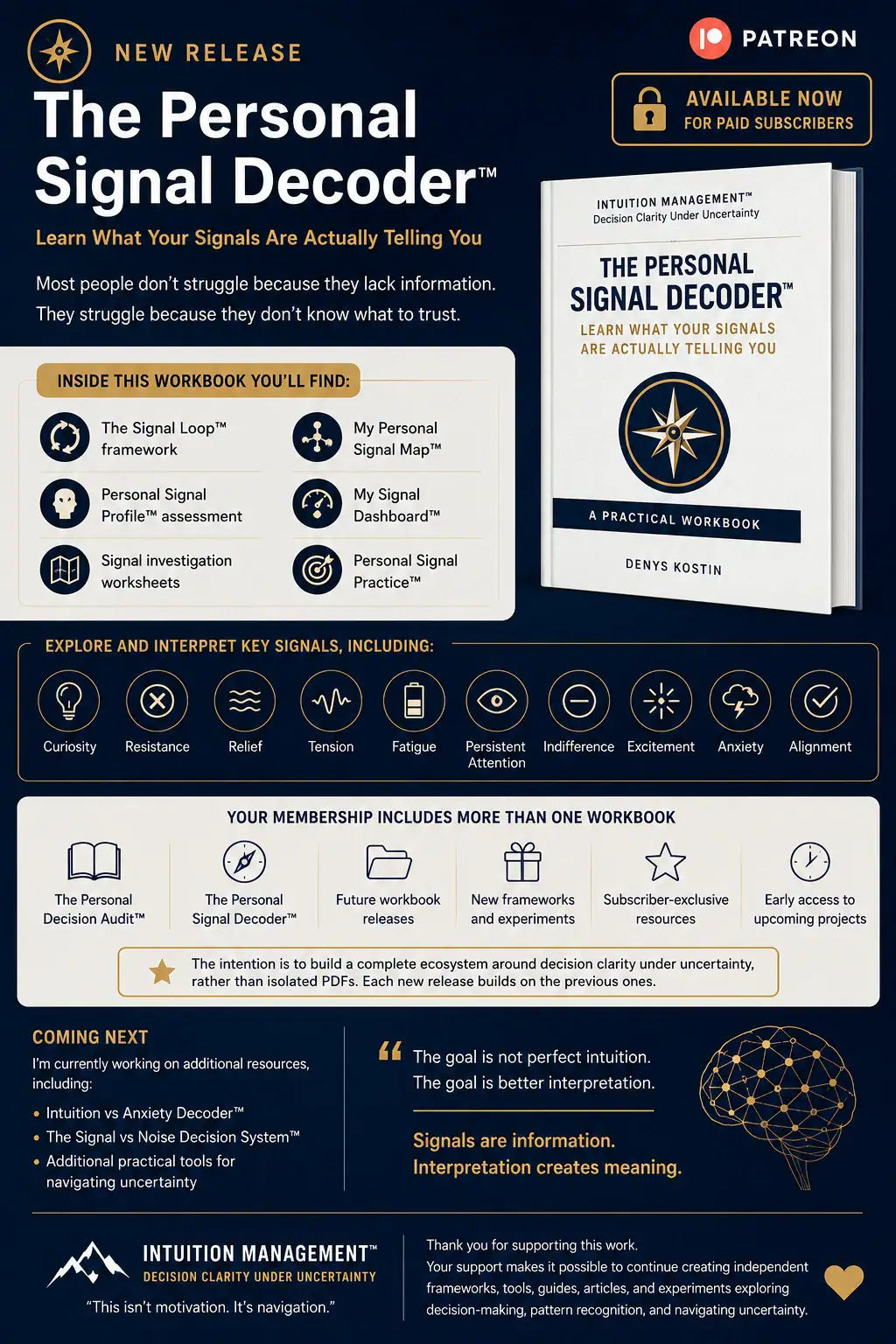
Signal is information that reflects what is actually happening. It is consistent, relevant, and connected to real outcomes.
- Pattern recognition — detecting meaningful patterns
- Somatic signals — internal cues that reflect alignment
- Decision clarity — when signal becomes strong enough to act
What is noise
Noise is anything that interferes with perception. It can come from external information, internal reactions, or distorted thinking.
- Cognitive bias — misinterpreting information
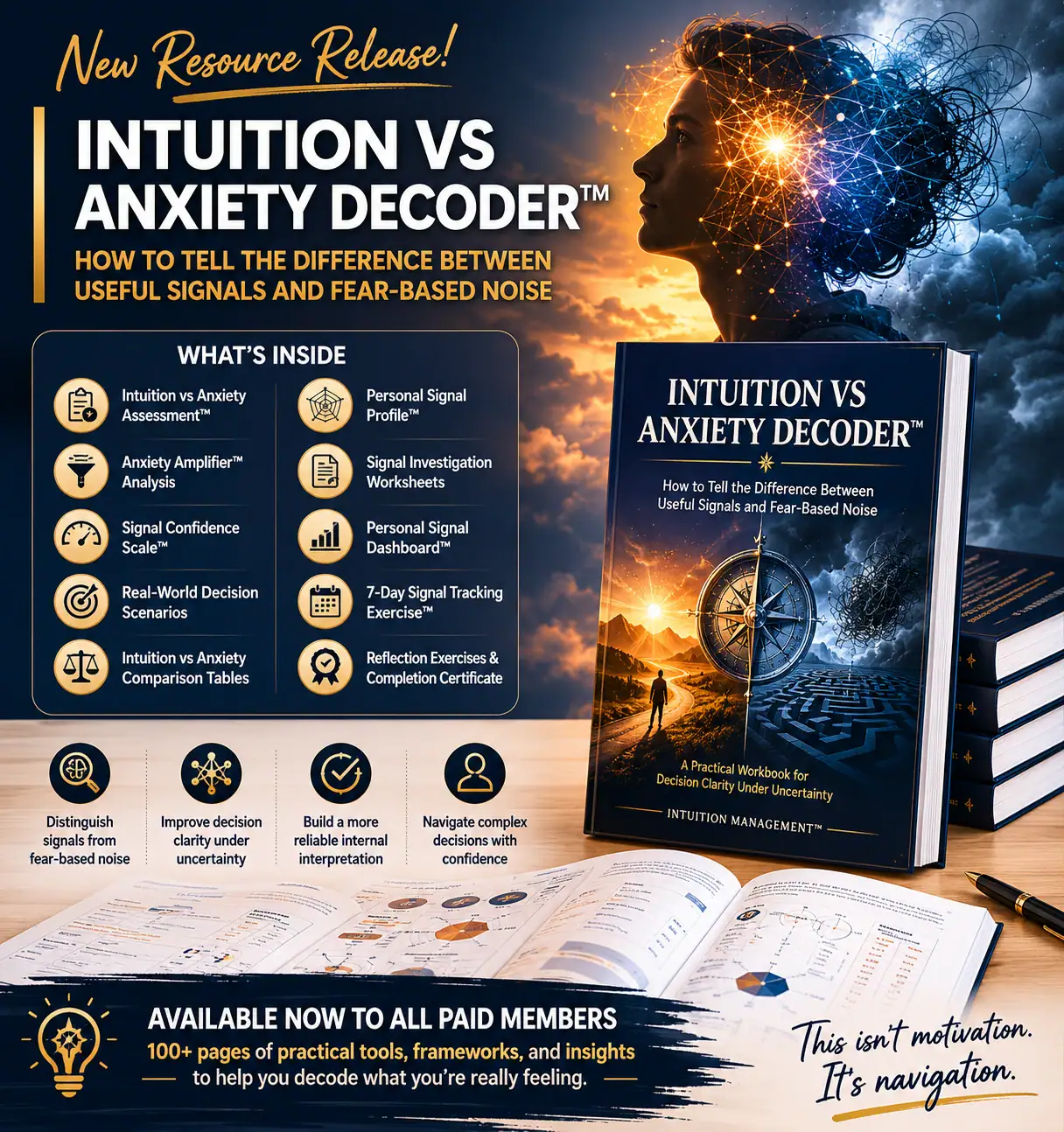
- Intuition vs anxiety — confusing fear with signal
- Decision fatigue — reduced ability to filter
Why signal is hard to see
- Nervous system — stress increases noise
- Clarity under pressure — urgency distorts perception
- Mindfulness — lack of awareness reduces filtering ability
Improving signal vs noise
Separating signal from noise improves when you slow down perception and reduce unnecessary input. Awareness, reflection, and attention to reliable patterns make it easier to recognize what truly matters.
- Self-regulation — stabilizing internal state
- Intuition training — developing signal recognition
Below are articles that explore how to filter information, reduce noise, and improve decision quality under uncertainty.